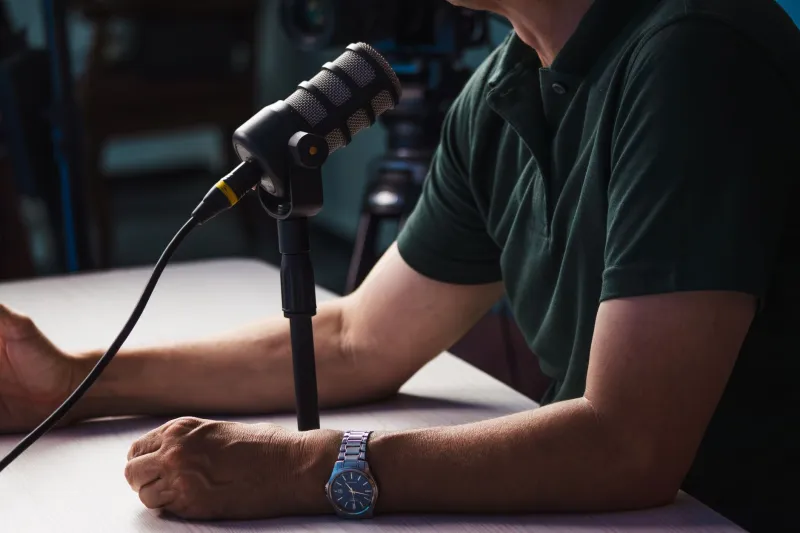
Forget the Script: Why Unfiltered Conversations Are Beating Hollywood at Its Own Game
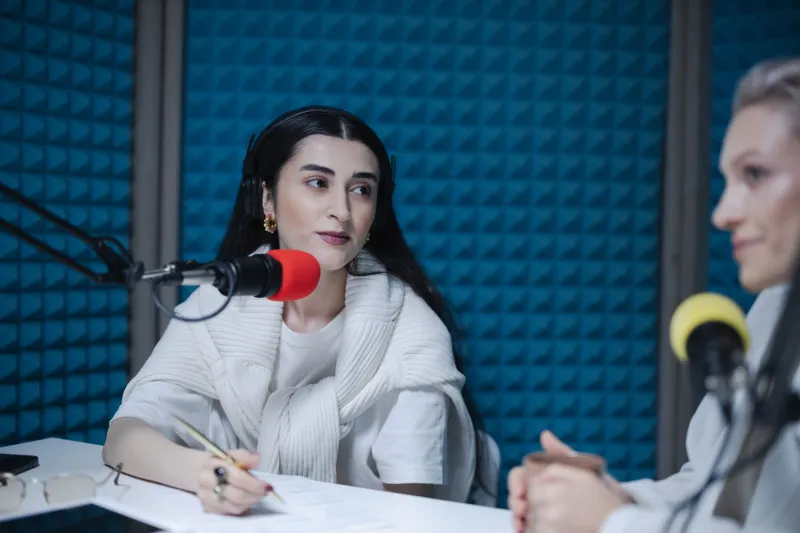
Let me paint you a picture. It's 11pm on a Wednesday. Someone in suburban Ohio is not watching the new prestige drama everyone's been talking about. They're lying in bed with AirPods in, listening to two people have a conversation — no music swell, no dramatic lighting, no writers' room — just two humans talking honestly about something that matters. And they're completely hooked.
This is happening everywhere, all the time, and it's not a niche thing anymore. It's the story of American media right now.
Here at MoniTalks, we're built on a simple belief: real conversations connect in ways that manufactured content simply cannot. Turns out, the rest of America is catching up to that idea fast.
The Numbers Don't Lie
Let's start with some cold, hard data before we get into the feelings — because the feelings are actually driven by the data, which is a fun twist.
As of 2024, there are over 4 million active podcasts globally, with the United States accounting for the largest share of both creators and listeners. Edison Research's Infinite Dial study found that roughly 135 million Americans listen to podcasts monthly — a number that has more than doubled in the past six years. Meanwhile, traditional TV viewership among adults under 35 continues to slide year over year.
But here's the stat that really tells the story: according to Nielsen, 80% of podcast listeners tune in for the majority of each episode. Compare that to the average social media video, where most viewers drop off within the first 30 seconds. People are not just sampling podcasts. They're committing. Long-form, unedited, real — and they're staying for all of it.
Something significant is happening in American living rooms, kitchens, and commutes.
The Authenticity Deficit
To understand why "real talk" is winning, you have to understand what it's winning against.
Social media spent the better part of a decade training us to perform. Instagram made us curate. TikTok made us choreograph. Even the stuff marketed as "authentic" content was carefully constructed — the messy bun was styled, the crying selfie was lit, the "candid" moment had three takes behind it. Audiences aren't dumb. We absorbed all of it, and somewhere along the way, we got exhausted by our own feeds.
Scripted television, meanwhile, got technically extraordinary and emotionally distant. The production value on prestige drama has never been higher. The budgets are cinematic. And yet — ask anyone under 40 what they actually watched last weekend, and there's a solid chance the answer involves a podcast episode or a long-form YouTube interview rather than whatever critically acclaimed series everyone's supposed to be watching.
People are craving something that doesn't feel engineered. And conversation — messy, rambling, occasionally awkward conversation — is about as unengineered as it gets.
What Experts Are Saying
Dr. Sherry Turkle, an MIT professor who has spent decades studying technology and human connection, has argued that Americans are experiencing a profound "conversation deficit" — that the rise of texting, social media, and on-demand content has eroded our capacity for genuine dialogue. When people find it in podcast form, she suggests, it scratches an itch that nothing else quite reaches.
Media analyst and cultural critic Anne Helen Petersen has written extensively about what she calls "parasocial intimacy" — the feeling of genuine closeness listeners develop with podcast hosts. But she's careful to distinguish this from the hollow parasocial relationships of traditional celebrity culture. The difference, she argues, is reciprocal vulnerability. When a host or guest gets genuinely personal, listeners don't feel like fans. They feel like friends.
That's a wildly different emotional transaction than watching a scripted show.
The Joe Rogan Effect (and What Came After)
You can't have this conversation without acknowledging the podcast that broke the dam. Joe Rogan's move to Spotify for a reported $200 million wasn't just a business deal — it was a cultural signal flare. It told every media executive in America that unscripted, long-form conversation had valuations that rivaled scripted content, and it told every aspiring creator that the format was legitimate.
But the more interesting story is what happened next. The space that opened up wasn't filled by Rogan clones. It was filled with an extraordinary diversity of voices — women, people of color, LGBTQ+ creators, niche communities — all running with the same basic format. Two people, a microphone, a real conversation. The democratization of the form turned out to be its greatest strength.
Shows like Call Her Daddy, Conan O'Brien Needs a Friend, SmartLess, Therapy for Black Girls, and We Can Do Hard Things don't have much in common stylistically. But they all trade in the same currency: the sense that you're hearing something real.
What This Says About Us
Here's the opinion part, and I'm owning it: I think the hunger for authentic conversation is a form of cultural correction.
We overcorrected into performance. We built feeds full of highlight reels and wondered why we felt lonely. We watched characters in prestige dramas navigate beautifully written crises and felt nothing. And then someone sat down with a microphone and said something true, and we felt everything.
Americans have always had a complicated relationship with vulnerability — we celebrate rugged individualism while quietly desperately wanting connection. The podcast format, at its best, holds both of those things simultaneously. You can listen alone, in your car, and feel less alone because of it. That's not a small thing.
The shift away from scripted media isn't about production quality going out of style. Great storytelling will always find an audience. It's about a recalibration of what we're willing to give our attention to — and increasingly, the answer is: people being honest.
Where MoniTalks Fits In
This is exactly why we do what we do. MoniTalks was built on the conviction that the most powerful thing you can put in someone's ears is a genuine human conversation. No studio gloss, no talking points, no publicist-approved sound bites. Just real people, real talk, real ripples.
The audience has arrived. America is leaning in, earbuds in, ready to listen.
The only question left is: who's brave enough to get real?