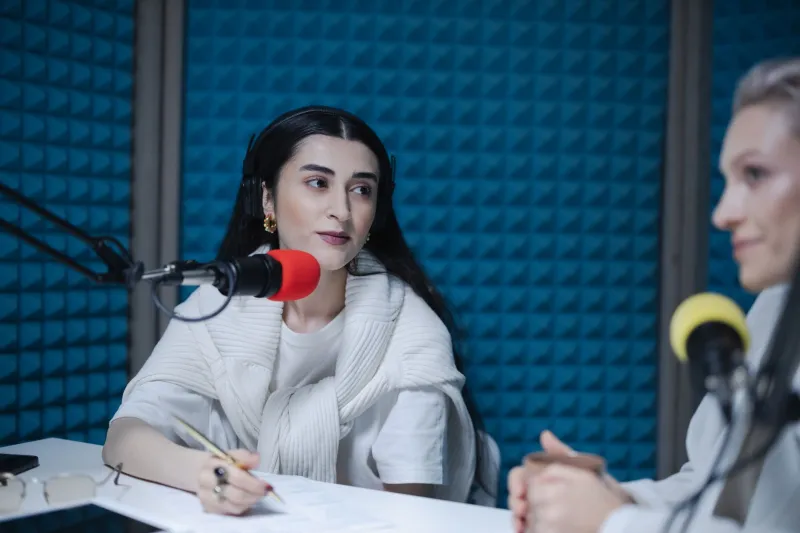
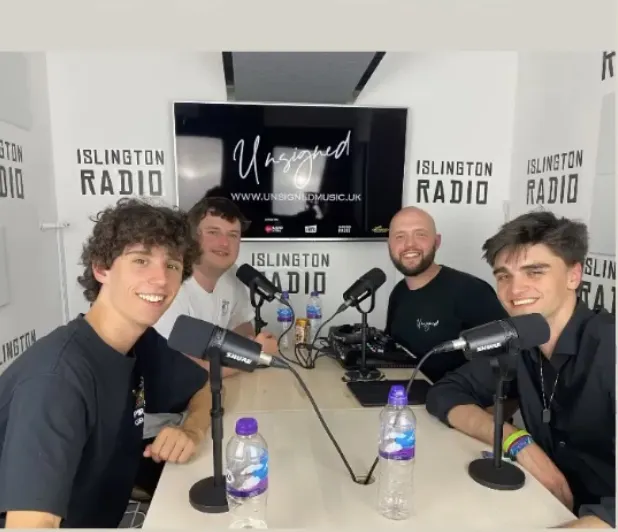
We Let Strangers With Microphones Do Our Crying for Us Now
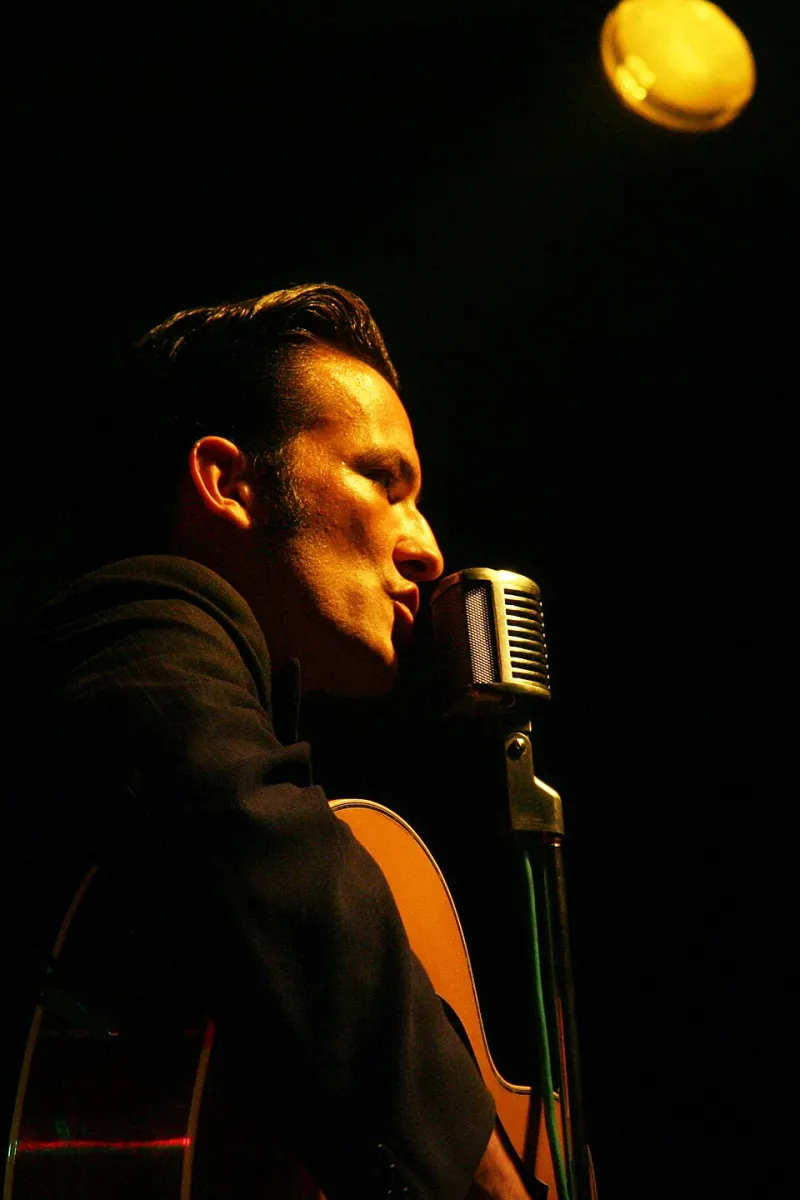
Photo: user:AngMoKio, CC BY-SA 2.5, via Wikimedia Commons
Here's a confession disguised as an observation: I have heard strangers on podcasts articulate feelings about my own life more precisely than I have ever managed to say them out loud to anyone who knows me.
If that sentence makes you wince in recognition, congratulations — you're part of the largest unacknowledged cultural shift of the podcast era. Millions of Americans have quietly outsourced their hardest emotional labor to hosts. Not therapy. Not friendship. To people with microphones and release schedules.
The Parasocial Therapist Will See You Now
The pattern is familiar by now. Your marriage is strained, so you listen to three episodes about communication breakdown. Your father is dying, so you queue up a grief pod on your commute. A host — warm, insightful, uninterrupted by any knowledge of your actual life — names the exact thing you've been circling for months. You feel seen. Understood. Processed.
And then you pull into the driveway, turn off the engine, and walk into your house without saying a word to anyone.
Look, I get the appeal, because I've lived it. A podcast host can't judge you, can't bring up your lapse at Thanksgiving, can't need anything back. The intimacy is real in feeling and risk-free in fact. It's emotional fast food that tastes homemade.
The Case for the Release Valve
Let's be fair to the habit before we bury it. For a lot of people — men especially, in a country where male loneliness is now measured in government reports — a podcast is the only place emotional vocabulary enters their lives at all. A guy who's never said "I felt abandoned" to a human being might hear it said on a show and think, huh, that's me. That's not nothing. That's a seed.
There's also a rehearsal function. You can't run a marathon without training, and maybe you can't have the hard talk with your spouse without first hearing someone else model what vulnerability sounds like. Hosts like Moni do something genuinely valuable here: they demonstrate the conversations people are too scared to start.
The Case That It's a Replacement
But here's where I lose the ability to be generous. A release valve releases pressure so the system can keep working. What happens when the valve becomes the system?
The uncomfortable truth is that listening to vulnerability is not the same as practicing it. The host's guest gets to be brave on Tuesday; you get to feel moved on Wednesday and remain silent at dinner. The podcast gives you the emotional payoff of a hard conversation — catharsis, insight, the sense of having gone deep — without any of the risk that makes it a hard conversation in the first place.
And risk is the active ingredient. The thing that makes telling your sister you're hurt actually mean something is that she could respond badly. She could dismiss you. The stakes are the point. Strip them out and you get the sensation of intimacy without the substance — a connection-shaped hole where connection used to go.
The Test
I've started using a simple metric on myself: if a podcast episode makes me cry in the car, I owe one real sentence to a real person within 48 hours. Not a monologue. One sentence. "I've been thinking about what you said at the party." "I'm struggling with work and I didn't want you to hear it from someone else."
One sentence. That's the down payment on the kind of intimacy no streaming platform can ship.
Podcasts aren't the enemy — this website exists because conversations between real people, hosted well, can change lives. But the medium works best as a bridge, not a bunker. Let the hosts show you what brave sounds like. Then go be brave somewhere that matters — across the table from someone who can actually answer back.
Your favorite host, if they're honest, would tell you the same thing. It's the last thing they'd want: an audience so busy listening that nobody's talking anymore.